Guest Speaker: David O’Byrne
By Alex Wilson
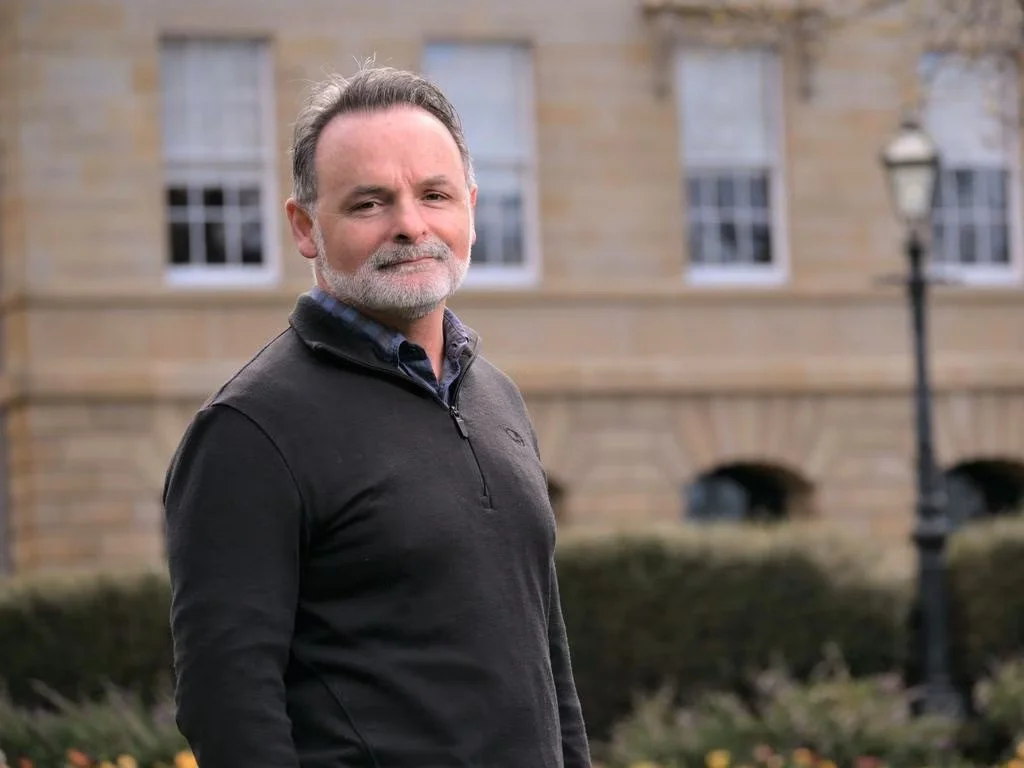
David O’Byrne says he learnt from his parents that values are essential, and those values he learnt as a kid have guided him through the rest of his life.
He wasn't the tallest. He wasn't the quickest. And he wasn't the first one picked. But he was always picked in the end. Not because of talent, but because he showed up.
Listening to David O'Byrne speak, that idea stood out early to the TALS students. His story doesn't begin with politics, leadership titles, or big decisions. It begins much earlier; in Launceston, in family, and in the values that quietly shape everything that comes after.
He spoke about his upbringing simply. His dad was a tradie painter, his mum worked hard, and they didn't have a lot of money. But what they did have were values. There was a right and a wrong. And you did the right thing.
That message wasn't framed as something extraordinary. It was just how things were. But over time, it became the foundation for everything; sport, career, and the way he approached decisions.
He described how those values played out early in team sport. He wasn't the standout player. He wasn't dominating games or getting selected first. But he kept turning up. Training. Playing. Being there. And eventually, he said, that's why he got picked. Not because he was the best, but because he was reliable.
There's something in that. Because in a lot of environments, showing up consistently matters more than being the most talented person in the room. And when you zoom out, that idea doesn't stay in sport, it moves into life.
The relationships he built through football, he described as life changing. The teammates weren't just teammates; they became lifelong mates. That sense of belonging, of being part of something, is something he kept coming back to. It's also what led him, without realising at the time, toward his career.
He spoke about working in unions, representing people who didn't always have a voice; cleaners, nurses, workers who couldn't individually change their situation, but together had strength.
That lesson was simple, but powerful: Individually, people can feel powerless. Together, they can create change.
What stood out wasn't just what he did; it was how he framed it. He said he was taught from a young age, "I don't want to hear about what went wrong. I want to hear about how you made a difference."
That line carries a lot. Because it shifts responsibility. It moves you from observing problems to owning them.
One example he shared made that real. Firefighters came to him and explained they were getting sick at higher rates due to the environments they worked in. At the time, the laws required individuals to prove exactly which fire caused their illness in order to receive compensation.
Think about that for a second. You're sick. You're dealing with cancer. And on top of that, you have to prove which moment caused it. That didn't sit right. So he worked to change it; pushing for presumptive cancer legislation so firefighters wouldn't have to go through that process.
Years later, after stepping away from politics for a period, someone approached him and said, "thank you, you saved my life." That person had developed cancer shortly after the legislation came in, and without it, he didn't know how he would have supported his family.
That was the moment, he said, that he knew politics mattered. Not because of position. Not because of status. But because of impact.
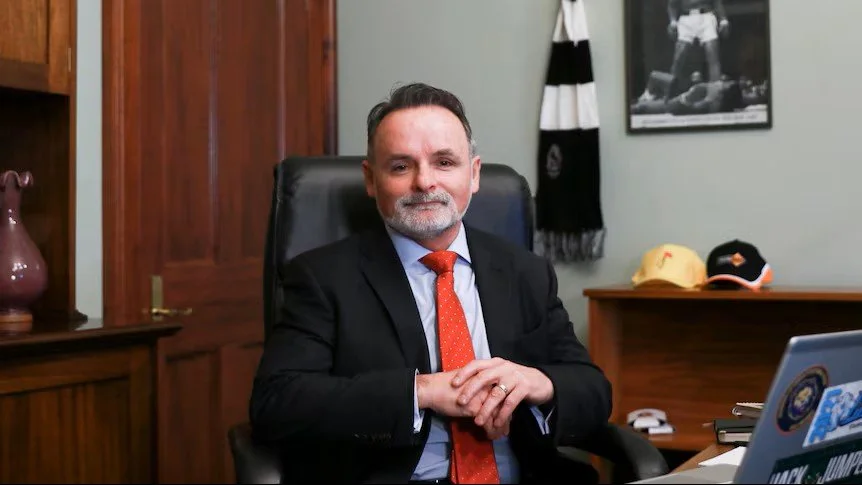
David O’Byrne explained how politics can have a significant impact on the lives of others.
There was another theme that ran strongly through everything he spoke about; the idea of standing up for what is right.
He didn't frame it as something easy. In fact, he made it clear that sometimes doing the right thing comes at a cost. It might not be popular. It might not be the safe decision. And in certain moments, it can go against what others expect.
But his view was simple: If you believe something is right, you should stand up for it. Even if it costs you in the short term.
That showed up clearly in how he spoke about sport in Tasmania. The conversations around the JackJumpers and the Devils weren't, for him, just political decisions. They were about opportunity, belief, and the future of the state.
He described a moment where both sides of politics were being pushed to support the idea of a Tasmanian NBL team. Rather than treating it as a point of difference or opposition, he made the decision to support it.
Not because it was politically advantageous, but because he believed it was right. He asked a simple question: Do we want Tasmania to be better? If the answer is yes, then some decisions aren't about winning or losing politically. They're about backing something that matters.
He spoke about the broader impact too; not just sport, but identity. "You can't be what you can't see." That line ties directly into why these teams matter. It's not just about games. It's about giving people something to believe in, something to belong to, and something that shows what is possible.
He described hearing the reaction when the Devils announcement came through; the sense of pride, excitement, and belief. Those moments, he suggested, tell you something important. Not everything that matters shows up in data or discussion. Sometimes, you feel it.
Another part of his perspective that stood out was how he spoke about leadership itself. He said it took him a while to fully understand his values, and that's important. Because often people expect clarity early. But in reality, values are refined over time. Through experience. Through mistakes. Through reflection. And he acknowledged that too.
He spoke openly about being human, about making mistakes, and about learning from them. One line in particular captured that: "I hope that all of us are not judged by our weakest moments, but by the strength we show if we're given a second chance."
That's not something you often hear in leadership conversations, but it's real. It recognises that leadership isn't perfect. It isn't clean. It isn't linear. But growth comes from how you respond.
He reinforced another key idea as well; something simple, but incredibly important: Be curious, not judgemental. Don't assume. Don't label. Don't decide who someone is based on surface-level information. Ask questions. Understand people. Because if you do that, you become not only a better person, but a better leader.
He also connected this idea back to sport and community. Whether it was football clubs, leagues, or teams, he kept returning to one word: purpose. Every team has a purpose. Every club has a role in the community. For him, the Southern Football League wasn't just about competition. It was about building strong clubs, creating environments where people want to belong, and ensuring participation continues.
Because sport isn't just performance. It's connection. It's identity. It's community.
Towards the end, his message became clearer and simpler to the students. Be clear on what you stand for. Know your direction. Don't throw away relationships. And keep working hard. Those ideas aren't complicated. But like he said at the very start, neither is leadership. It just requires intent. And the willingness, when the moment comes, to do what is right.
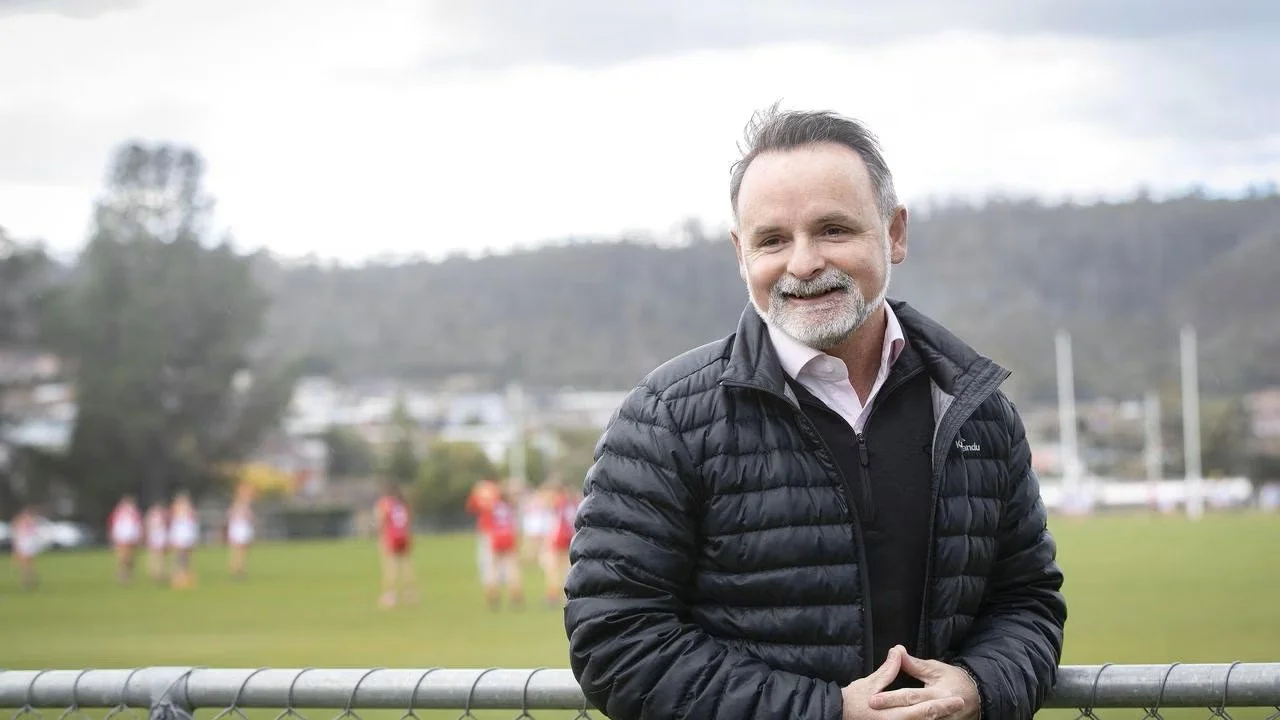
David O’Byrne during a Southern Football League match.