Guest Speaker: Ariarne Titmus
By Alex Wilson
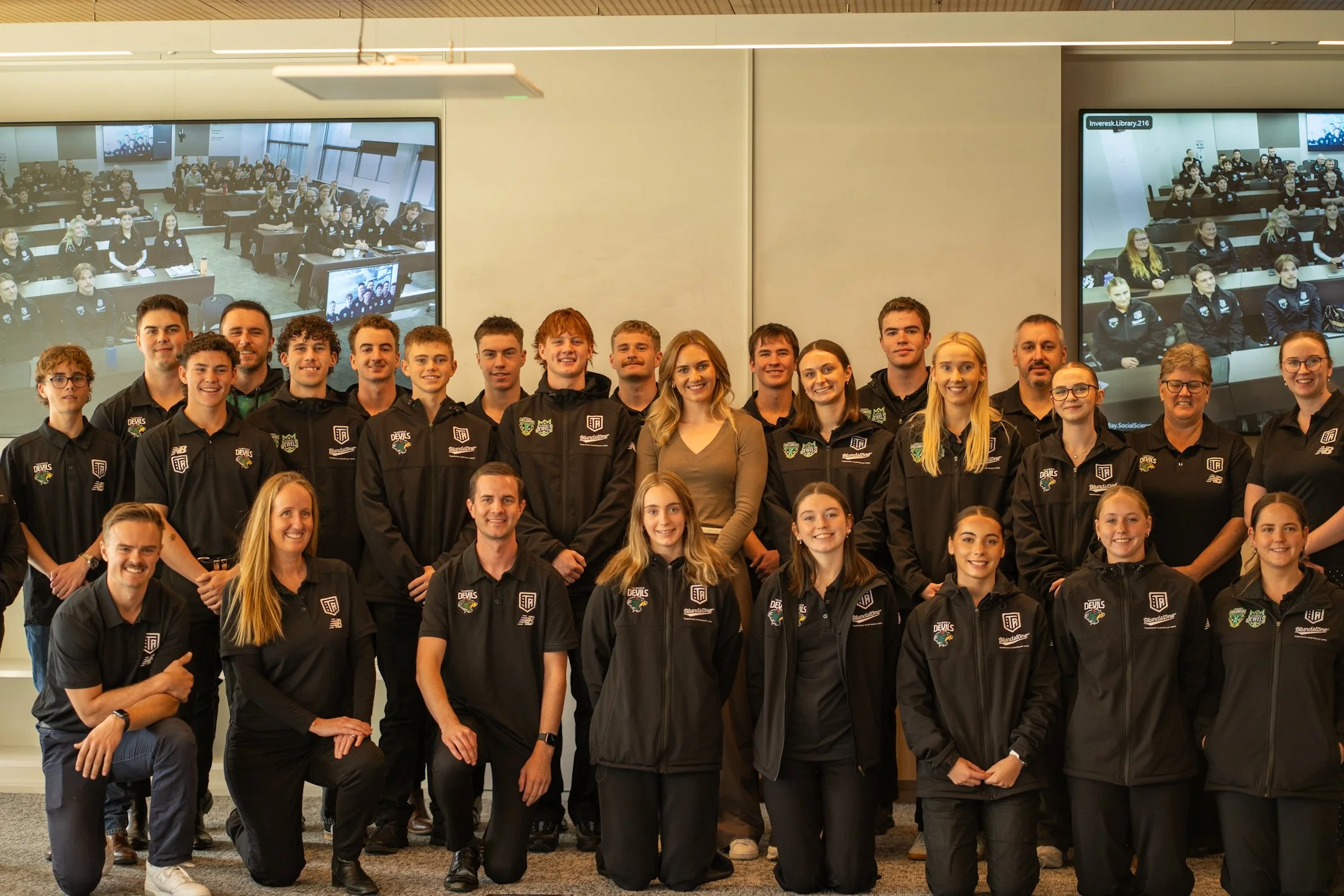
Ariarne Titmus pictured with TALS Northern Cohort
There are athletes who win because everything goes right. And then there are athletes who win because they made it almost impossible for things to go wrong.
Listening to Ariarne Titmus speak, that distinction quickly became clear to the TALS cohort. Her story isn't built on a single breakthrough moment or a lucky sequence of races. It is built on preparation, sacrifice, and a mindset that refuses to negotiate with the standard.
She began by taking the students back to Launceston; growing up there, going to school there, and falling in love with swimming before it ever became a career. She spoke about Tasmania with the kind of pride you can't fake: "the best place in the world". That wasn't a slogan. It was identity.
But pride doesn't replace reality, and she was honest about that too. Tasmania and Queensland do not offer the same high-performance swimming ecosystem. At one stage, when her coach moved back to Queensland, the solution wasn't to wait for things to improve around her. It was to create a workaround that kept her moving forward. She described organising training sessions where a coach in Queensland would send her the program, and she would show up to the aquatic centre morning and night, pay the public entry fee, and swim seven kilometres anyway.
That detail matters because it reveals a bigger truth: high performance often begins before resources arrive. Sometimes you build the standard first, and the environment catches up later.
Eventually, like many elite Tasmanian athletes, she and her family made the major move to Queensland so she could pursue better training opportunities. She was 14 when her family relocated to Brisbane for her swimming.
The way she described it wasn't dramatic. It was simply understood: her parents made a sacrifice, but they didn't turn that sacrifice into pressure. That, she explained, made it easier. She could focus without carrying emotional debt.
Swimming became the one constant. Early mornings. Pool before school. School. Pool again. The kind of routine that looks extreme from the outside but becomes normal when you live inside it. She said she was driven by the sport in a way that made everything else feel secondary. That single-mindedness is hard to explain unless you've been around elite athletes, and she didn't romanticise it. She simply told the truth: she lived and breathed it.
What struck the students most was how far back she traced the value of work ethic. Even at ten years old, she said, she wanted to work. She wasn't a "great swimmer" as a kid. She wasn't always ahead. But she kept working. And if there's one thing she credited more than anything for her success, it was that: work. Not talent. Not hype. Not being "built for it". Work.
That's a significant message because it dismantles a common myth: that greatness is obvious early. Her story suggests something different; greatness can be built, and often is.
When people talk about Ariarne Titmus now, they often start with the outcomes; Olympic gold, world records, dominance in middle-distance freestyle. Those outcomes are real. She won Olympic gold in the 200m freestyle and the 400m freestyle at Tokyo, and later won the 400m freestyle again at Paris.
But in her session, she didn't dwell on the medals first. She spoke about the system and the mindset that made those outcomes possible.
A lot of that became clearest when she spoke about her coach, Dean Boxall. She credited him not only for training, but for teaching her what it meant to live like a professional athlete; diet, gym work, preparation, and standards. She said she needed a "bad cop", someone who would drive her to be better.
And then she gave a story that tells you exactly what she means. She described winning a race by two body lengths, becoming world champion, and having Dean Boxall walk in and say it was terrible, because one 50 wasn't what it was supposed to be.
That sounds harsh until you understand the logic behind it. The standard wasn't "win". The standard was "perfect execution". Because in her world, complacency is the beginning of decline. If you get satisfied, someone catches you. And in Olympic sport, the gap between gold and not-gold is usually tiny.
This is where her thinking about pressure becomes unusually practical. She said the only way to combat expectation is to be as prepared as possible. If you stand behind the blocks knowing you did everything you could; every rep, every turn, every day, you can be at peace with the result. That's not arrogance. That's process. That's control where control is possible.
Her mindset point landed especially hard: If your mind isn't more prepared than your body, you will not win. That's not a motivational quote. It's a performance truth.
She admitted it takes a degree of "almost cockiness"; not arrogance, but certainty, to perform at the highest level. You have to believe you will win. You have to hold that belief even when you're nervous, even when you're tired, even when the stage is bigger than you've ever experienced.
And then she described what that belief felt like in Tokyo. She spoke about waking early for the Olympic final and feeling strangely calm. She did star jumps to wake herself up without making noise. She messaged her coach and said she was going to win that day. She had a feeling. Then she executed.
She talked through the plan, the adjustments, the reality of racing on the biggest stage where many athletes prepare perfectly and still have things go wrong. She emphasised that everything went to plan, and she was grateful for that.
But what made it go to plan wasn't luck. It was the foundation. She mentioned doing 100 turns after every session because she wasn't naturally a strong turner, and in Tokyo she out-turned Katie Ledecky. That detail sits quietly in the background of an Olympic highlight, but it's a lesson in itself: weaknesses can be engineered into strengths if you're willing to do boring work long enough.
Her respect for Katie Ledecky also mattered. She described Ledecky as the benchmark; a presence and aura that had been earned. She wanted to be better as a swimmer, and the only way to beat the benchmark was to become better than it. That rivalry is well documented in her competitive history, including her breakthrough win over Ledecky in the 400m freestyle at the 2019 World Championships.
But in how she spoke about it, the rivalry wasn't personal. It was directional. Ledecky represented what was required. That's an important distinction for anyone chasing excellence: the "opponent" isn't always a person; sometimes it's a standard.
She was also honest about the cost of that relentless focus. Her biggest regret, she said, was always chasing the next thing and not "smelling the roses". Even after winning, she would try to forget it quickly so she could focus on the next race. She would literally have her medals hidden so she wouldn't get distracted.
There's something confronting about that; not because it's wrong, but because it reveals how narrow the window is at the top. She acknowledged the trade-off clearly: maybe she would have enjoyed it more if she slowed down, but maybe she wouldn't have been as successful.
That's one of the most mature things elite athletes can admit: there is no perfect version of the story. There are only choices.
She explained how her goals were treated like engineering problems. At 16, she told Dean Boxall she wanted to be an Olympic champion. He broke down the benchmark times, looked at what it would take to win in four years, then worked backwards: rep by rep, day by day, week by week, month by month. The goal wasn't a dream. It was a plan.
That's a lesson far beyond sport. Most people set goals and hope motivation will carry them. Her approach suggests something else: motivation is unreliable, but systems aren't.
When she spoke about retirement, the same honesty came through. She described how the decision built gradually. Part of it was physical. She had a tumour and recovery was tough, and time away from the sport gave her a new perspective.
But more than the body, it was the mind. She realised how much she loved life outside the pool; time with family, work, other opportunities. The fire began to fade. She said you cannot do this sport at 80 percent; it requires 100. And she asked herself a question that many athletes avoid: if she won more gold medals, would it actually satisfy her?
Her answer was clear enough that she acted on it. She retired in October 2025, stepping away as one of Australia's most decorated swimmers, with an Olympic medal haul that includes four gold, three silver, and one bronze.

Ariarne said that although she is seemingly young, she knew the “time was right” to retire.
She framed retirement as one of the biggest life changes an adult can go through. Suddenly you're not around "your people" in the same way. You don't have the same adrenaline. The structure disappears. She said she misses the routine but feels fulfilled in many ways. She is learning how to structure days differently now and acknowledged that there are good days and bad days.
That kind of honesty matters because it's the part of elite sport people rarely see: not the win, but the aftermath.
She also spoke about women's sport in a way that felt both personal and practical. She raised the issue of participation drop-off, the reality that many girls stop playing sport after high school, and argued that the answer isn't just programs; it's environments. Safe environments. Communities. Places where people feel they belong and can be themselves. Sport, she said, should feel like home.
That's an especially powerful message coming from someone who achieved at the very top, because it reframes sport as more than performance: it becomes wellbeing, identity, and connection.
When she was asked what advice she would give her younger self, she didn't say "change this" or "fix that". She said: don't change. Your uniqueness matters. There is only one of you.
Then she added the line that probably sits at the heart of everything she shared: Be sure about the direction you want to go in. Have a clear purpose. Know the stepping stones. Don't throw away networks. And never stop working hard.
Not because work guarantees medals; it doesn't. But because work builds a foundation that holds up under pressure, and that foundation lasts beyond sport.
If there's a single thread running through Ariarne Titmus' story; Tasmania to Brisbane, quiet grind to Olympic gold, relentless chase to knowing when to stop, it's this: Success is rarely a moment. It's the outcome of being ready, again and again, long before anyone is watching.
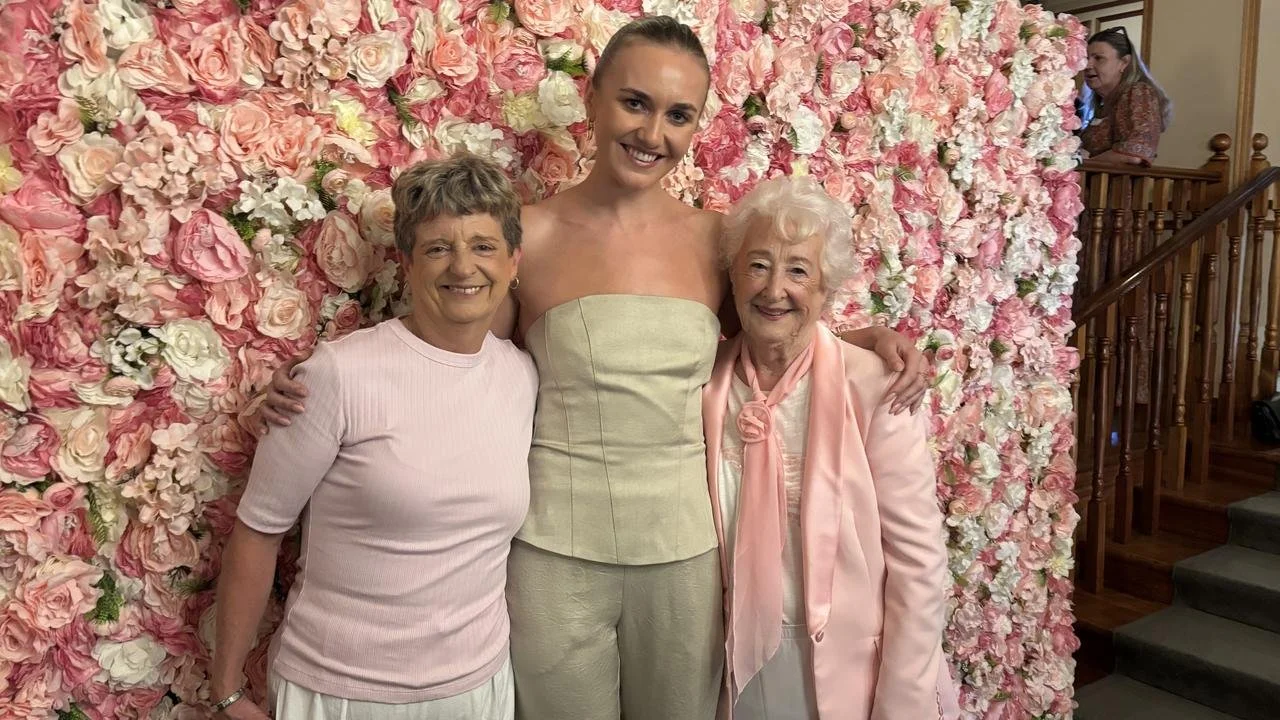
Ariarne Titmus at Launceston International Women’s Day Event.