Guest Speaker: Annie Johns
By Alex Wilson
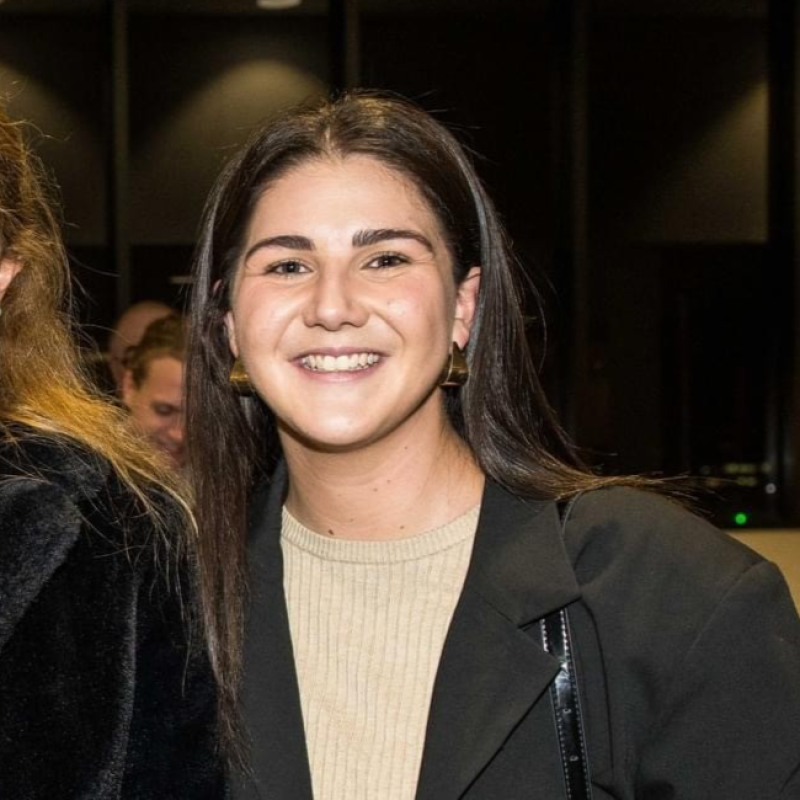
Annie Johns has built a succesful career in Risk, Safety, and Compliance.
Sport is often defined by what we see. The crowd. The players. The result. But none of that happens without something else sitting underneath it. Planning. Structure. Responsibility. And people making sure everything runs safely. Recently, the students at the Tasmania Academy of Leadership and Sport (TALS) had the opportunity to hear from Annie Johns, who works in Risk, Safety and Compliance with Stadiums Tasmania. What stood out to the TALS cohort wasn't just the complexity of her role, but how much of sport depends on work most people never see.
Annie didn't start with a defined path. Like many people early on, she wasn't entirely sure what she wanted to do. She began with a Business Administration traineeship. Then took a step away. Moved overseas. Studied further, completing diplomas in areas like HR.
It wasn't a straight line. But it was a process of exploring opportunities and building skills over time. That eventually led her into safety and risk. A field that combines structure, accountability, and people. And one that now places her at the centre of how major events operate.
When people think about safety, they often think about rules. Processes. Checklists. But Annie explained it differently. Everyone has a responsibility. Under workplace health and safety laws: leaders must ensure others are safe, individuals must take responsibility for their own actions, and everyone must work in a way that does not put others at risk.
It's not optional. It's shared. And often, it's the smallest details that matter most. "The tiny little things are usually what lead to the biggest consequences." That idea sits at the core of her work. Because safety failures rarely come from one major mistake. They come from things that were overlooked. Left out. Or assumed to be fine.
From the outside, events look seamless. But from Annie's perspective, they are anything but simple. On event day, things move quickly. Very quickly. You're being pulled in multiple directions at once. Situations change. Decisions need to be made immediately.
And that's why preparation matters. If you're not organised. If you're not ready. If something has been missed. That's when problems happen. Because everything that seems "boring" in the planning stage exists for a reason.
What most people wouldn't realise is the volume of planning behind a single event. There isn't just one document. There are many. Safety Management Plans, Security Plans, Emergency Plans, Event Control Processes, Traffic and Crowd Management, Evacuation Strategies, and Noise Management.
Each one exists to manage a different risk. And each one must be: communicated, understood, and applied. Because documentation alone doesn't make an event safe. Understanding does. That's where Annie's role becomes critical. Not just creating systems. But translating them. Making sure the people working at the event understand what matters, and what they need to do. Because most staff don't need hundreds of pages of information. They need clarity.
One of the most important parts of her role is taking complex information and making it practical. Breaking it down. Communicating it. Making it usable. Because in high-pressure environments, people need information they can act on. Not theory. Not complexity. Clear instruction. And that's where her people skills come in.
Annie described herself as a people person. And in her role, that matters. Because safety isn't just about enforcing rules. It's about getting people to understand, buy in, and take responsibility. That requires trust. And trust is built through communication, collaboration, and relationships.
Much of her work involves engaging with stakeholders. Talking to venue operators. Working with emergency services. Managing expectations of communities and neighbours. Finding solutions that work for everyone. Because safety in sport doesn't exist in isolation. It affects everyone involved.
One thing she highlighted is how collaborative the events and safety industry is. People share knowledge. They support one another. They learn from each other's experiences. Because no two events are exactly the same. And learning from others helps improve decision-making in your own environment.
At its core, safety is about people. When people feel safe, they perform better. They engage more. They feel valued. And for organisations, that matters. Because safety isn't just compliance. It's culture. It's an indication of how much people are valued within a workplace. And that flows into everything else.
The nature of Annie's work means that a lot of what she does goes unnoticed. If things go well, no one thinks about safety. But that's the point. Success in her role is when nothing goes wrong. And that requires consistency. Attention to detail. And the ability to think ahead.
Because even something as simple as a venue redevelopment can change everything. New layouts. Different exit points. Changed crowd flow. All of which require completely new plans.
Across her journey, a few key lessons stand out. Be organised. Be prepared. Communicate clearly. And most importantly: If you see something, say something. Because small issues become big ones when they're ignored.
Annie Johns' story is a reminder that sport doesn't run on talent alone. It runs on people behind the scenes. People who plan. Who prepare. Who take responsibility for things others don't see. Her journey shows that you don't need a perfect plan to find your path. You need to be willing to learn, adapt, and take opportunities as they come.
Because in the end, the work that makes sport possible often isn't what happens on the field. It's everything that happens before anyone arrives.